


DIDICATED TO THE 55th ANNIVERSARY OF MOSCOW STATE TECHNICAL UNIVERSITY OF CIVIL AVIATION
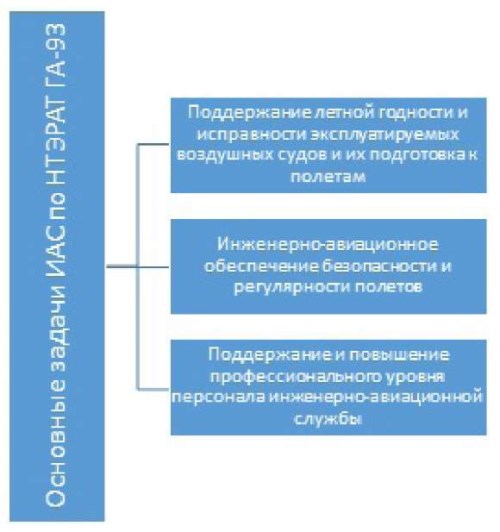
The article continues and develops the subject of the civil aviation engineering service in the 75th anniversary year of its existence, raised in the first article on this theme. It analyzes the activities of the aviation engineering service in the early post-Soviet period, when the main regulatory document was the fifth edition of the Manual on Technical Operation and Repair of Aviation Equipment (NTERAT GA-93). An analysis of the goals, objectives and functions of the aviation engineering service during this period, regulated by the manual, is carried out. It is shown how they changed and were supplemented in the process of accumulating experience until a coherent system of technical operation of aviation equipment was formed, including aviation personnel – the basis of the aviation engineering service until continuing airworthiness became its main task. The article analyzes the main documents of the International Civil Aviation Organization (ICAO), the American Federal Aviation Administration (FAA) and the European Aviation Safety Agency (EASA) in historical and substantive aspects, shows the structure of domestic federal aviation regulations in their development in terms of continuing airworthiness. The problems that have arisen due to the loss of the normative and legal status of the terms “technical operation” and “aviation engineering service” are identified. The tasks that arise in this regard are formulated. It is proposed to change the list of aviation personnel by adding a specialist in continuing airworthiness management to it with the issuance of a certificate with the qualification category D with the privilege to prepare an airworthiness review certificate for an aircraft instance. The need to retain the names of specialties in the technical maintenance of aircraft and their components in the new federal educational standards, to fill the content of higher education curricula with coverage of the technically competent use of aviation equipment, including in flight, as well as the management of continuing airworthiness of aircraft and the suitability of their components for safe flight is substantiated.
TRANSPORTATION SYSTEMS
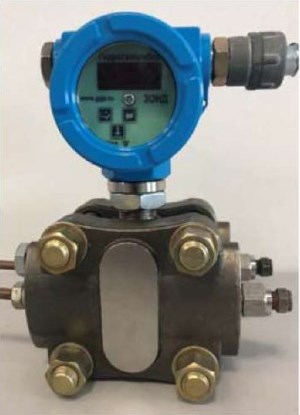
Ensuring the cleanliness of aviation fuel from mechanical impurities is a critical factor in flight safety. Existing laboratory methods for monitoring fuel cleanliness are discrete and do not allow for the prompt detection of contaminants during aircraft refueling, which creates significant risks. The objective of this study was to experimentally investigate and optimize the parameters of a partial-flow control filter to create a system for continuous, real-time monitoring of aviation fuel cleanliness. The key diagnostic parameter in this study was the pressure drop across the filter element, which directly correlates with the amount of accumulated mechanical impurities. A combination of experimental and analytical methods was used in the study: bench tests were conducted on corrugated polypropylene filter elements with varying surface areas, during which the dependence of the pressure drop on the mass of the introduced contaminant (kaolin mixture) was measured. This resulted in the dependence of the pressure drop on the specific contaminant capacity. It was found that this dependence has four characteristic zones: an initial linear zone, where the pressure drop increases proportionally to the contamination, and three nonlinear zones, where the rate of pressure drop increase significantly as the pores of the filter element become clogged. A parametric study was conducted using this experimental curve, which showed that for optimal filter operation, its filtration area should be 0.05–0.10 m². Based on this study, a system for operational monitoring of aviation fuel cleanliness using a check filter was proposed. This ensures not only a long service life (200–400 refuelings) but also high system sensitivity: the estimated response time to exceeding the rejection level of contamination averages 5–10 seconds, which is determined by the rate of change in the pressure drop upon the influx of impurities. The practical feasibility of using a check filter, where the pressure drop serves as a reliable and informative parameter for creating a system for promptly warning of aviation fuel contamination directly during refueling, was proved.
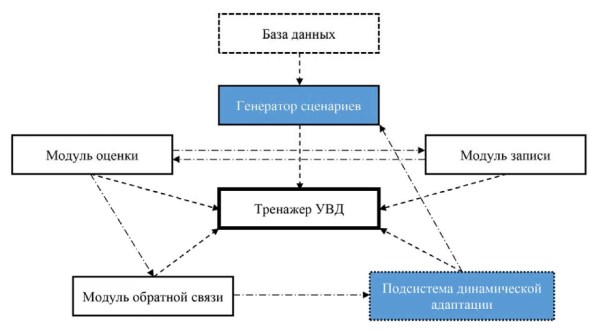
This work is devoted to the development of an innovative algorithm for creating adaptive simulator scenarios for training air traffic control (ATC) officers using dynamic complexity. The relevance of the study is caused by the rapid increase in air traffic intensity, which requires fundamentally new approaches to training of specialists. Traditional simulator training methods based on the manual creation of a scenario by an instructor do not take into account the individual characteristics of students, which reduces effectiveness of the learning process and can lead to cognitive overload. The main goal of this research is to create an intelligent system capable of automatically adapting the complexity of exercises in real time, taking into account the current skill level, decision-making speed, error rate and the psychophysiological state of the controller. The paper offers an integrated approach combining the analysis of professional competencies, modeling cognitive load generation of training situations. Special attention is paid to the balance between the gradual complication of tasks and the prevention of stress overload. The research methodology includes the development of a mathematical model for assessing the student’s level, an algorithm for dynamically adjusting scenario parameters (e.g., number of aircraft, weather conditions, emergency situations) and a feedback system. The developed system allows you to create personalized training programs that are as close as possible to real working conditions, but with a controlled level of complexity. The practical significance of this work lies in the possibility of implementing the proposed solutions into existing training complexes, which will contribute to improving the quality of ATC training and as a result, air traffic safety. The scientific novelty is confirmed by the author’s developments in the field of students adaptive learning and the integration of biometric indicators into exercise generation process. The prospects of further research are related to the expansion of the base of training scenario database, the introduction of virtual reality technologies and the development of intelligent systems for analyzing learners’ actions based on machine learning methods. The proposed approach can also be adapted for other high-responsibility professions requiring quick decision-making in stressful conditions.
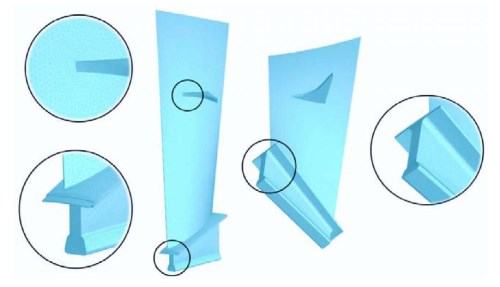
Jet engines are subject to various damaging factors, among which operational ones are dominant throughout their life cycles. At the same time, the dominant share of deteriorations specific to compressor components occurs in the fan module of modern turbofan engines: bends, cracks as well as dents on fan blades and distortions of tip section. Repairing these defects, according to operations and maintenance documentation, usually requires removal of material that primarily carries the applied loads. Rotor blades of booster stages and the high-pressure compressor (HPC) are also susceptible to the same types of mechanical damage, albeit to a lesser extent. At the same time wide chord fan blades are becoming increasingly common. Evaluation of rotorblade operational capability is based on strength criteria. This article presents the principles and results of complex research – not previously reported in works – on how defect rectification affects stress distribution in compressor rotor blades of three specific sizes (“classic” fan blades, wide-chord fan blades, booster-stage and first-stage HPC blades). To solve the stated problem, 3Dmodels of compressor rotor blades were developed using CAD software Kompas-3D integrated with the structural analysis module APMFEM for mass-produced aviation engines of the CFM56 family. The validity and adequacy of the modeling principles and blade parameters were verified by estimating the natural frequencies of compressor-blade vibrations in the CAD environment and by experimental assessment using the resonance method. The paper makes it possible to understand the degree to which damage rectification in various areas of compressor blades of three specific sizes and in perspective wide-chord fan blades impacts operational capability in practical terms.
MECHANICAL ENGINEERING
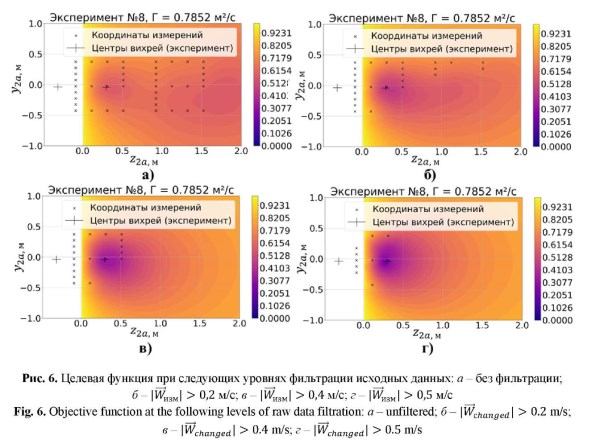
This paper studies the problem of automatic detection of stable vortex wake generated by fixed-wing aircraft using airflow skew vectors measurements. A methodological approach is proposed that enables the effective application of gradient optimization methods to solve this problem. To smooth the objective function, a modification of the classical Rankine vortex model is developed. Constraints are introduced that significantly reduce the search space and eliminate the periodicity problem. It is further demonstrated that excluding data with low skew levels allows to obtain a unimodal objective function, thereby increasing the reliability of the search. Experiments conducted in a wind tunnel confirmed the effectiveness of the proposed algorithm: in all test scenarios the presence of a vortex wake was successfully detected for various wing configurations. The obtained results can be used to improve fuel efficiency in formation flight and for the development of onboard monitoring systems for vortex structures.
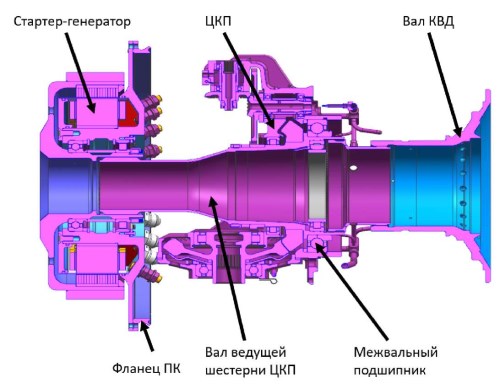
The paper presents a flow part comparative analysis of a gas turbine engine intermediate casing with a starter-generator integrated onto the rotor shaft based on a more electric aircraft engine concept. This paper identified the need for design modifications and a gas-dynamic study of the intermediate casing of a two-stage compressor in a gas turbine engine. A description of the prototype engine’s intermediate casing design was provided, and several flow path geometry variants were constructed for a transition channel with an enlarged axial dimension. The design was also modified in terms of the circumferential arrangement of the racks, their shape, purpose, and quantity, compared to the intermediate casing of the prototype engine. Based on the design, computational models were developed and calculated in the gas-dynamic module of imported computational software at a specific engine operating mode. To construct the geometry and computational models, as well as to define the boundary conditions, we used methods developed by renowned experts, taking into account recommendations for changing the area, channel shape, inclination angles, turbulence models, mesh quality, and specifying conditions at the inlet and outlet of the transition channel. The velocity and pressure gradients in the longitudinal and transverse directions were obtained as the results. Based on the data obtained, the total pressure losses in each of the engine stage were calculated. Based on this research, areas for necessary modifications to the design of existing intermediate casings were identified when installing an integrated starter-generator with a central bevel drive in a gas turbine engine, as well as improvements to the channel flow parameters to ensure minimal total pressure losses at the gas generator inlet.
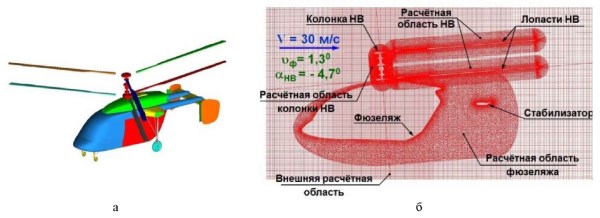
The work is dedicated to numerical modeling of Kamov Ka-226 helicopter aerodynamics for isolated helicopter airframe and helicopter airframe with coaxial main rotor. The CFD (computational fluid dynamics) method based on the URANS approach (Unsteady Reynolds-averaged Navier-Stokes equations) based on the Ansys Fluent software has been used. The hybrid overset mesh contained from 45 (isolated airframe) to 58 (airframe/rotor combination) million cells. The isolated helicopter airframe aerodynamic characteristics have been investigated for various airframe configurations such as: isolated fuselage, fuselage + tail, fuselage + tail + rotor head and fuselage + tail + rotor hub + landing gear (full configuration). The range of pitch angles from −16 to +16° has been considered. The full airframe/rotor combination aerodynamics has been investigated for a flight speed of 30 m/s. Comparison of calculated aerodynamic characteristics of isolated fuselage and full airframe configuration with wind tunnel (WT) test data has showed a satisfactory match. The results of numerical modelling of helicopter airframe aerodynamics have demonstrated specific features, such as: presence of negative lift force on the helicopters fuselage in horizontal flight and formation of two powerful vortex bundles behind the fuselage that affecting the tail stabilizer. The results of numerical modelling of helicopter airframe/rotor combination have allowed evaluating the effect of main rotor wake on the helicopter airframe aerodynamics. The performed study demonstrates the wide possibilities of the URANS approach in solving the complex problems of optimizing helicopter aerodynamics, taking into account the interference of airframe, its individual parts and main rotor.
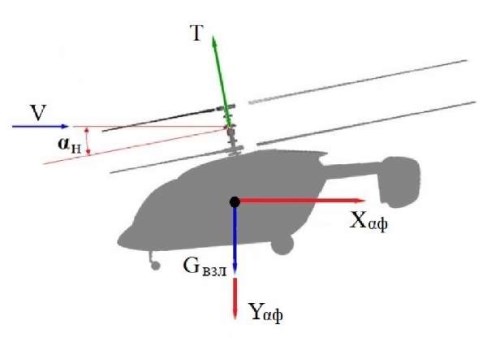
A coaxial main rotor (MR), consisting of upper (UR) and lower (LR) rotors with a spacing of planes and a different direction of rotation, has a number of advantages in aerodynamic characteristics compared to an equivalent single rotor of the same radius, having a double number of blades and solidity. The equivalent MR model is often used in approximate methods of aerodynamic calculation. In this case, the features of the coaxial MR are taken into account using special corrections. This requires data on the coaxial and equivalent MR aerodynamic characteristics in various operating modes. The article is dedicated to comparative study of the coaxial and equivalent MR aerodynamic characteristics. The Ka-226 helicopter coaxial MR is considered. The research was performed on the basis of the free vortex wake model of a rotor. The modes of hovering and forward flight in the speed range of V = 0–60 m/s were considered. The calculations were performed taking into account the rotor trim and compensation of aerodynamic loads occurring on the helicopter airframe, assumed to be the same for both rotors. It was found that the required power of a coaxial MR at hovering (V = 0) is 6% less than that of an equivalent MR with equal thrust. At V = 20 m/s, the advantage of the coaxial MR reaches 8%, and then gradually decreases. At V > 60 m/s, the required power of the coaxial and equivalent MR, all other things being equal, does not differ. The results obtained complement the available information on the features of the coaxial and equivalent MR aerodynamics and can also be used to refine approximate methods for calculating flight performance and flight dynamics models of coaxial helicopters using the equivalent MR model.

ISSN 2542-0119 (Online)


