


TRANSPORTATION SYSTEMS
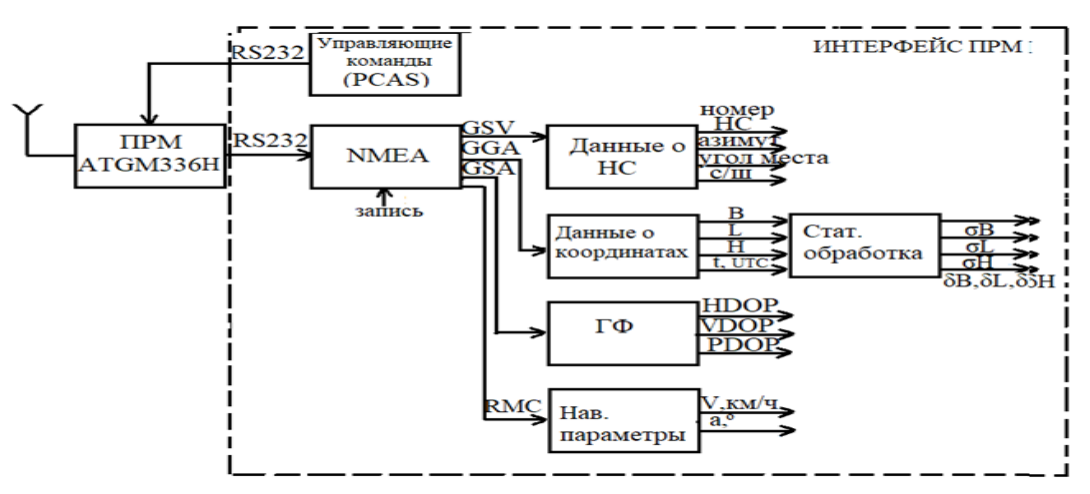
Modern unmanned air vehicles (UAV) are equipped with satellite navigation receivers to provide stability in space and maintain the desired track. The satellite navigation receivers feature low noise immunity that can result in loss of satellite signals and, hence, in deviation from the desired track or control loss. The paper presents a technique for improving the immunity of a satellite navigation receiver under wide- and narrow-band interference as well as deceptive interference. The technique was implemented through the analysis of NMEA output data of a satellite navigation receiver. The main advantage of the proposed technique is the use of relatively small computational power of the onboard computer. The proposed technique is based on the analysis of the signal/noise ratio, the number of navigation satellites used as well as the integrity of the output coordinates of an UAV receiver. The proposed technique allowed developing an algorithm for detecting the interference which consists of two stages. At the first stage, presence of interference is identified, the second stage implies the comparison of the output coordinates of the receiver with the desired ones making it possible to assess the effects of deceptive interference. The algorithm is implemented in the G programming language in the LabVIEW environment. The technique and the algorithm for identifying the interference were tested by conducting a series of semi-natural experiments with the CH-3803M signal simulator which allowed estimating the threshold values of signal levels from navigation satellites in the presence of interference. As a test sample the ATGM336H multisystem satellite navigation receiver was used that provides a possibility to select a satellite navigation system (GLONASS, GPS or BeiDou) or to use their combination for solving an UAV navigation problem. The authors conducted a series of experiments for assessing the effects of different interference on the performance of the ATGM336H satellite navigation receiver.
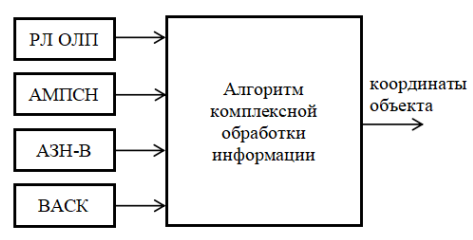
The safety of the traffic of aircraft and special vehicles at an airfield is largely determined by the level of ground movement surveillance and control systems at the airfield, specifically within the airfield maneuvering zone, which includes the runway, taxiways, and apron. Modern surveillance systems, including airfield surveillance radars, airfield multi-position surveillance systems, and automatic dependent surveillance system equipment, have high tactical and technical characteristics that ensure the required level of ground traffic safety at the airfield. However, these surveillance systems are radio-based and therefore susceptible to radio interference, which can significantly worsen their performance or completely prevent their intended use. Advanced surveillance systems, particularly vibroacoustic monitoring systems, are not susceptible to radio interference and can operate in any weather and at any time of the year and day, however, they have a significant disadvantage – the inability to determine the coordinates of stationary objects at the airfield. A possible solution to the current contradiction is to integrate existing and prospective systems into a single, integrated airfield traffic monitoring and control system. This article, based on Markov theory for estimating random processes, develops algorithms for integrated processing of information on the movement of objects in the airfield area and proposes structural diagrams for an integrated airfield traffic monitoring and control system. It concludes that it is feasible to create an integrated airfield traffic monitoring and control system capable of detecting abnormal system operation.
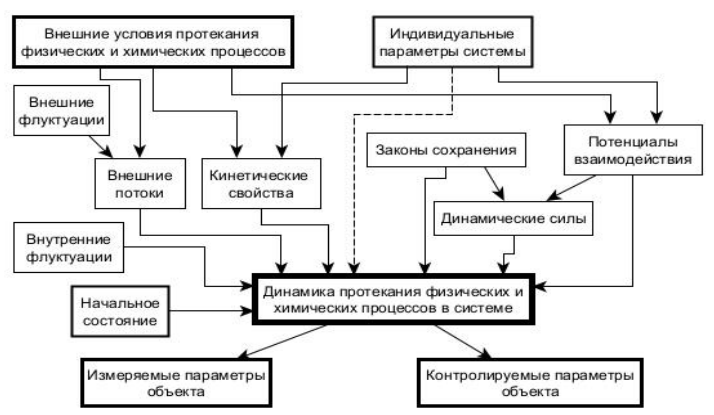
This paper examines the problem of identifying the parameters of a complete mathematical model of lithium-ion batteries (LIBs), based on the Method of Mathematical Prototyping of Energy Processes (MMPEP). The relevance of this topic is due to the increasing use of LIBs in aviation, including unmanned aerial systems, and the necessity to ensure the reliability and durability of batteries through accurate prediction of their characteristics. The MMPEP approach is outlined, which makes it possible to obtain models that rigorously comply with the laws of energy conservation and thermodynamics, while also considering the physicochemical characteristics of specific batteries. Particular focus is given to the stages of model parameter identification – from initial approximation based on experimental data to further optimization using modern numerical methods and machine learning algorithms. The study analyzes current tools for parameter identification, including XGBoost, Random Forest, and neural networks. It describes the development and training of an inverse neural network on synthetic data generated from the complete LIB model, and highlights the features of preparing and selecting strategies to improve prediction quality. A sensitivity analysis of the model to the various parameters is conducted, thereby enabling more targeted identification and improving the accuracy of battery diagnostics. The neural network architecture combining time-series processing and static features is presented, along with the results of experiments predicting key LIB parameters. It is noted that the obtained neural network can be useful in the rough parameter identification stage, whereas further developments will involve more complex architectures and integration of physically informed approaches to achieve more accurate mathematical models that can serve as the basis for creating digital twins of lithium- ion batteries.
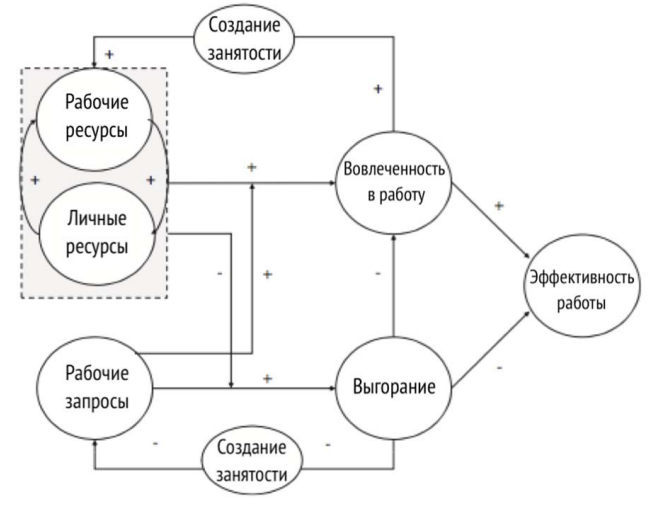
This article analyzes the impact of the average monthly workload on the dynamics of professional competencies of civil aviation flight personnel in the context of professional burnout and psychophysiological exhaustion syndrome. Based on a longitudinal study of the data of 800 airline pilots for 9 months, an assessment of technical and non-technical skills was carried out in accordance with the International Civil Aviation Organization (ICAO) standard DOC 9995. The methodology includes statistical analysis of correlations between flight hours, competency assessments and aviation incidents, as well as the use of the Demand- Resources model to interpret exhaustion mechanisms. The results revealed the absence of a direct link between the volume of flight hours and aviation incidents, which confirms to the effectiveness of safety management systems. However, a sharp workload increase (over 10 hours) leads to a decrease in the proportion of positively assessed flight crew competencies, reflecting the depletion of adaptive resources. Non-technical competencies show the greatest vulnerability, while technical skills remain stable. Cyclical overloads create an imbalance between competencies, reducing productivity in following months, which corresponds to the exhaustion phase. Based on the data obtained, a set of measures for prevention of occupational burnout syndrome is proposed, including the implementation of Fatigue Risk Management Systems (FRMS) using wearable biosensor devices, training programs for stress testing and AL algorithms for predicting burnout. The results highlight the critical role of regular competency monitoring for risk forecasting and the need to integrate psychophysiological aspects into crew resource management. The study confirms that dynamics of non-technical skills serve as an early indicator of latent safety threats, that require a preventive approach.
Modern requirements for safety and efficiency in air traffic management (ATM) necessitate the improvement of training methods and the assessment of the competencies of air traffic controllers. This article proposes two methodologies for evaluating the professional skills and competency levels of air traffic controllers (ATCs). The first methodology is based on the classical subjective assessment method. The second methodology focuses on key job components evaluated objectively. Multicriteria analysis based on fuzzy logic theory allows for an effective and comprehensive assessment of ATCs competency levels. The evaluation scale enables the comparison of the characteristics of the analyzed competencies with various components to understand their impact on a specific controller. The developed multicriteria methodology includes a multi-level analysis of key competencies, such as situational awareness, cognitive load, operational decision-making, communication effectiveness, risk management and stress resistance. This method can be used to assess specialists at any level of experience – from newly employed individuals to experienced professionals, as well as student controllers. Criteria for quantitative and qualitative assessment are proposed allowing for an objective determination of the specialists’ readiness to work in real-world conditions.imageAnalyzing the ATCs competencies will enable timely preventive measures to be taken for better training and the elimination of violations. Special attention is paid to the practical implementation of the methodology. The proposed approach is advisable to be used when assessing ATM personnel in combination with artificial intelligence. The implementation of this system will contribute to enhancing flight safety, reducing the impact of human factors in critical situations, and optimizing training processes in aviation training centers.
MECHANICAL ENGINEERING
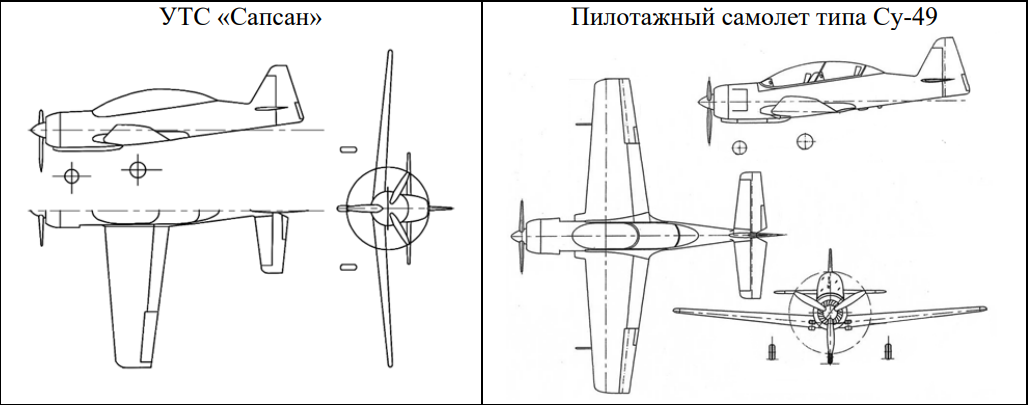
The trainer aircraft is a special class of light aircraft designed for initial flight training pilots and maintaining control skills at the required level. The use of specially designed trainer aircraft with additional safety features such as tandem control, favorable behavior of aerodynamic characteristics at high angles of attack and simplified cockpit layout allows pilots to master safely control skills of the aircraft. A step-by-step approach of flight training for civil and military pilots usually begins with mastering control skills on initial training aircraft. Currently, the Russian fleet of initial training aircraft is equipped primarily with Yakovlev Yak-52 aircraft, developed by the Yakovlev Design Bureau in 1974 based on the Yakovlev Yak-50 aerobatic aircraft. Further improvement of flight skills can be achieved on aerobatic aircraft category developed by the Sukhoi Design Bureau, for example, the Sukhoi Su-26 aircraft. Technical factors that influence the safety of training and the level of pilot training are the reliability and aircraft flight performance. Aircraft flight performance depends mainly on the wing aerodynamics, as well as on the available effectiveness of the control surfaces and the characteristics of the selected power plant. The level and nature of the behavior of the lift generated by the wing, including the one at high angles of attack, are determined by the wing planform and the characteristics of the assigned profile. Wing aerodynamics also has a significant impact on the aircraft controllability characteristics and safe piloting capabilities in the operational range of flight modes. Thus, meeting the requirements associated with ensuring the declared level of aircraft aerodynamic characteristics, as well as controllability at high angles of attack, together are the main goal of wing design.

ISSN 2542-0119 (Online)


